 Dogs Explained
A wagging tail does not always mean a happy dog. A wag shows that a dog is emotionally switched on and willing to interact, but the feeling behind it can be joy, excitement, nervousness or tension.
The skill is telling which one you are looking at. Tail height, the style of the wag and the rest of the body together give you a much clearer answer than the wag alone.
Does a wagging tail always mean a dog is happy?
No. Animal-behaviour experts describe tail wagging as a sign of arousal, meaning the dog is emotionally engaged. It says that something has the dog's attention, not whether the dog feels good about it.
Think of it like a person's raised voice. It tells you they are worked up, but you need more information to know if they are thrilled, nervous or annoyed.
This is why a dog can wag while meeting someone they are unsure about. They are alert and ready to respond, and the wag is simply part of that readiness.
What does tail height tell you?
Start with where the tail is being held. Height is one of the easiest clues to spot from a distance.
- High and stiff: this usually signals an alert or aroused dog. The dog is focused on something and may be excited, but may also be on edge.
- Neutral and relaxed: the tail sits in the dog's natural resting position and moves easily.
- Low or tucked between the legs: this signals worry or fear. A dog wagging a low tail is often trying to be polite or is simply unsure.
A low wag is a good example of why wagging is not the same as happiness. The tail is moving, but the position tells a different story.
What does a friendly wag look like?
A relaxed, friendly wag tends to look loose. It often builds from the back end, so the hips and rear of the body sway along with the tail.
The tail usually makes wide, sweeping arcs. Some dogs wag so enthusiastically that the tail moves in full circles. This looseness is what separates a friendly wag from a nervous one.
Look for these signs alongside it:
- A soft, wiggly body that curves rather than stands rigid
- Relaxed eyes
- A loose, open mouth
- Easy movement, with the dog coming toward you or going back and forth comfortably
When the whole dog looks like a happy wiggle, you can be fairly confident the wag is a friendly one.
How can you tell a wag that means "give me space"?
Picture a tail held high, moving in short, quick, stiff flicks, while the rest of the body stays still. That combination can mean tension. Behaviour guidance often links this kind of stiff, high movement to arousal or possible conflict.
The dog may be excited, but may also be unsure about what happens next. The safest response is to give that dog room.
Here is what to do:
- Stop approaching and avoid reaching toward the dog.
- Avoid staring, leaning over or crowding them.
- Let the dog move away if they want to.
- Wait until the body softens before interacting.
This matters most with dogs you do not know, and with children, who often assume any wagging dog wants a hug. A stiff or frozen body is a clear sign to pause and give the dog space.
Does wagging to the left or right mean something?
Possibly, and it is a fascinating bonus clue. In research by Quaranta, Siniscalchi and Vallortigara, published in Current Biology in 2007, dogs wagged more to the right when they saw their owner. They wagged more to the left when they saw something unsettling, such as an unfamiliar dominant dog. A follow-up study by Siniscalchi and colleagues in 2013 explored this further.
This is a research finding about tendencies, not a rule you can use on its own. It is very hard to judge left and right by eye in everyday life, especially with a fast-moving tail.
Treat it as an extra piece of the puzzle. Height, looseness and the rest of the body are far more practical to read in the moment.
How do I read the whole dog, not just the tail?
The most reliable method is to look at everything at once. Tail, body, ears, eyes and mouth work together, and veterinary behaviourists consistently advise reading them as a group.
A relaxed dog usually has a soft, wiggly body, relaxed eyes and a loose, open mouth. A tense dog may look stiff or frozen, and that is your cue to pause and give space.
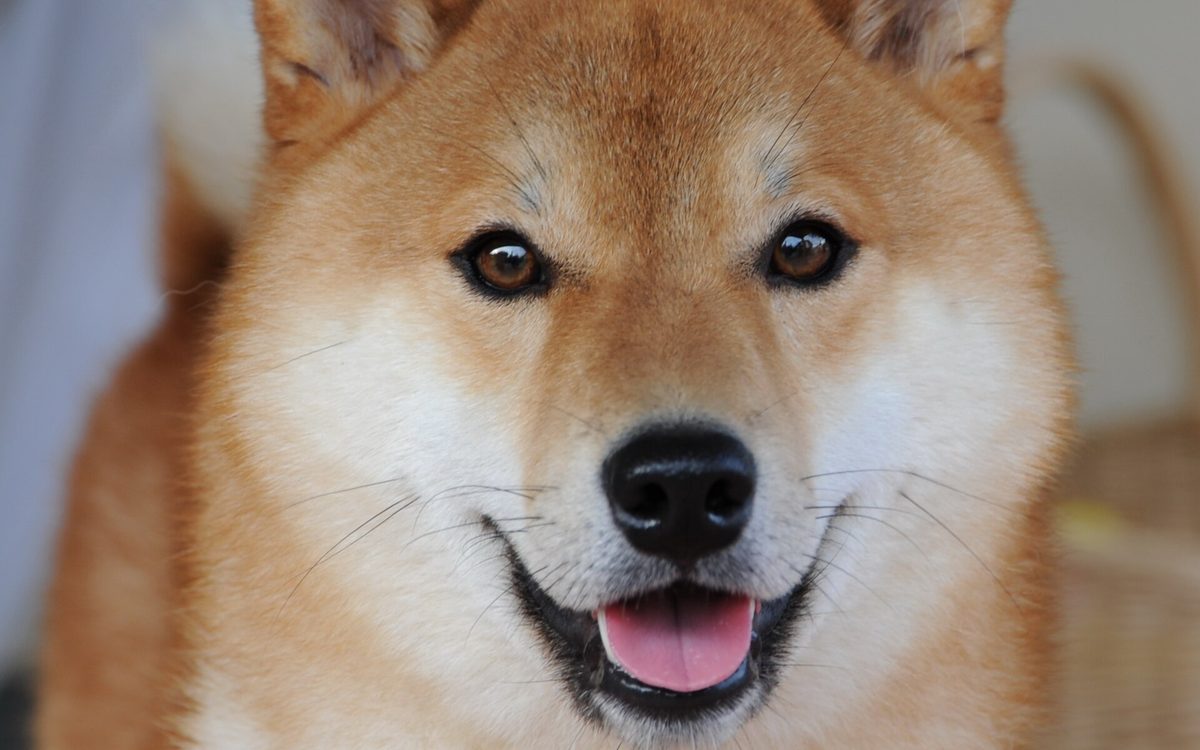
It also helps to know your own dog's normal. Tails are not built the same way on every dog. A Shiba Inu naturally carries its tail curled over its back, while a Greyhound's tail sits low. A low tail on a Greyhound may just be a Greyhound at rest, and a curled tail on a Shiba is usually standard for the breed.
So judge changes from your dog's usual baseline. Notice how their tail looks when they are calm, then watch for differences when something new happens.
One health note: if your dog's tail suddenly looks different from usual, such as being held oddly, not moving as normal, or your dog seeming sore when you touch it, see a vet. Do not try to work out the cause yourself.
Finally, spend a little time simply observing your dog. Notice what their happiest wag looks like, with the loose hips, wide arcs and soft face. Once you know that picture well, other wags stand out more clearly.