 Dogs Explained
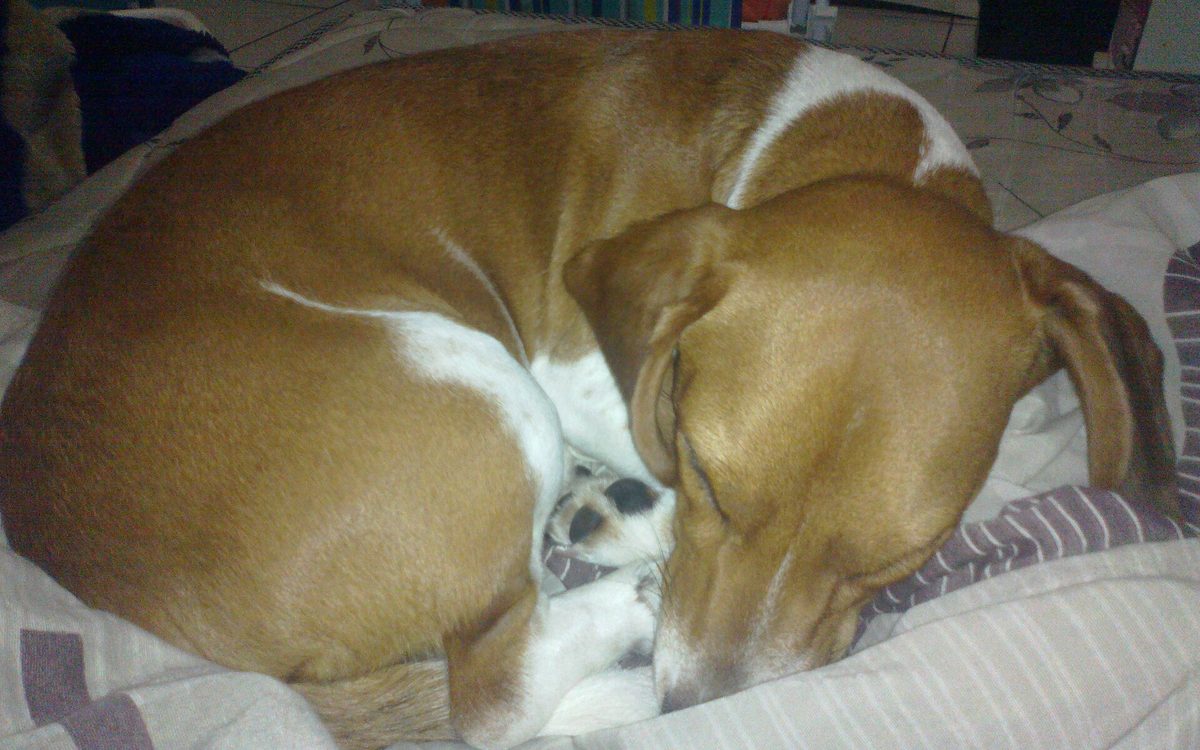
Adult dogs often sleep around 12 to 14 hours a day, so a dog who naps through most of the afternoon is usually just being a dog. What matters more than the exact number is whether your dog's sleep fits their own normal routine.
How many hours a day should a dog sleep?
Most adult dogs land somewhere around 12 to 14 hours of sleep in every 24. That is a typical range, not a rule, and healthy dogs can sit a little above or below it.
Puppies need even more. Young puppies often sleep for most of the day, waking in short bursts to play, eat and go to the toilet. Sleep is part of how they grow, so a sleepy puppy who wakes up bright and curious is doing exactly what a puppy should.
Senior dogs also tend to nap more than younger adults. The change is usually gradual, building up over months or years rather than appearing overnight.
Why does my dog sleep so much more than I do?
Dogs sleep differently from people. We tend to sleep in one long block at night, while dogs sleep in many short stretches spread across the whole day and night. Their naps fit in around meals, walks and whatever is happening in the house.
Dogs also spend a good share of their rest in light sleep. That is why a dog who looks fast asleep can lift their head at a rustle, a doorbell or a car door down the street. Research that records brain activity in sleeping dogs shows light sleep stages and frequent waking, unlike the longer, deeper sleep people get.
So not every one of those 12 to 14 hours is deep, switched-off sleep. A lot of it is resting with one ear on duty.
Like people, dogs also pass through different sleep stages. In the stage linked with dreaming, many dogs twitch, paddle their paws, move their whiskers or make soft muffled sounds. This is generally normal and nothing to worry about.
Why does my dog sleep more on some days than others?
Day-to-day changes usually have ordinary explanations. These are the most common ones:
- A busy day. After a long walk, a play session, a trip out or lots of visitors, many dogs sleep more to recover.
- Boredom. When there is nothing to do, a lot of dogs simply nap. Sleeping can be what a dog does when nothing else is on offer.
- A quiet house. When the home is calm, dogs settle easily and can sleep for long stretches. When it is noisy or busy, they may rest in lighter, shorter bursts.
This means a dog who sleeps more on a quiet, rainy day is not automatically a cause for concern. Look at the pattern across several days rather than a single lazy afternoon.
If you think boredom is part of the picture, mental activity can help. Sniffing walks, food puzzles and short reward-based training games give a dog something to do besides wait for the next meal.
Do naps actually do anything useful?
Yes. Sleep is not wasted time for a dog. In a 2017 study published in Scientific Reports, researchers found that sleep after a training session was linked to how well dogs remembered what they had learned. Brain activity during sleep, including short bursts known as sleep spindles, was related to how the dogs performed.
That is a link, not proof that sleep is the only thing that matters. Still, it fits with what we know about learning in many animals.
In practice, you do not need to fill every hour of your dog's day. After a short, reward-based training session, a rest is part of the process, not a sign that the lesson failed.
How can I help my dog sleep well?
A few simple habits make good rest easier:
- Offer a comfortable, quiet spot. Choose a bed away from the busiest doorway or the loudest appliances, but not so isolated that your dog feels left out. Many dogs like to nap where they can still see the family.
- Keep a steady routine. Regular meal, walk and play times help many dogs know when it is time to settle.
- Let sleeping dogs lie. Waking a dog suddenly can startle some of them. If you need to wake your dog, call their name softly from a short distance.
- Balance rest with activity. Exercise, sniffing and play during the day usually go hand in hand with comfortable rest later.
When is my dog's sleeping a reason to call the vet?
Your dog's own routine is the best guide. Long naps are usually normal. What deserves attention is a sudden, noticeable change from how your dog usually is.
Call your vet if your dog:
- suddenly sleeps far more than usual
- suddenly sleeps far less than usual
- is hard to wake
Abrupt changes in behaviour can sometimes be a sign that something is wrong, and only a vet can tell what is going on. There is no need to work it out at home or wait to see if it passes.
A slow increase in napping as your dog gets older is common. It is still worth mentioning at your dog's regular check-up so your vet knows what is normal for them.
It can help to notice your dog's usual pattern: where they sleep, roughly how long, and how they wake up. That makes any change easier to spot and easier to describe to your vet.
So is it normal for my dog to sleep all day?
For most dogs, long naps are completely normal. Dogs sleep in many short, light stretches, and puppies and seniors often need more rest than adults in their prime.
Get to know what is usual for your dog, enjoy the sleepy moments, and speak to your vet if something changes suddenly.