 Dogs Explained
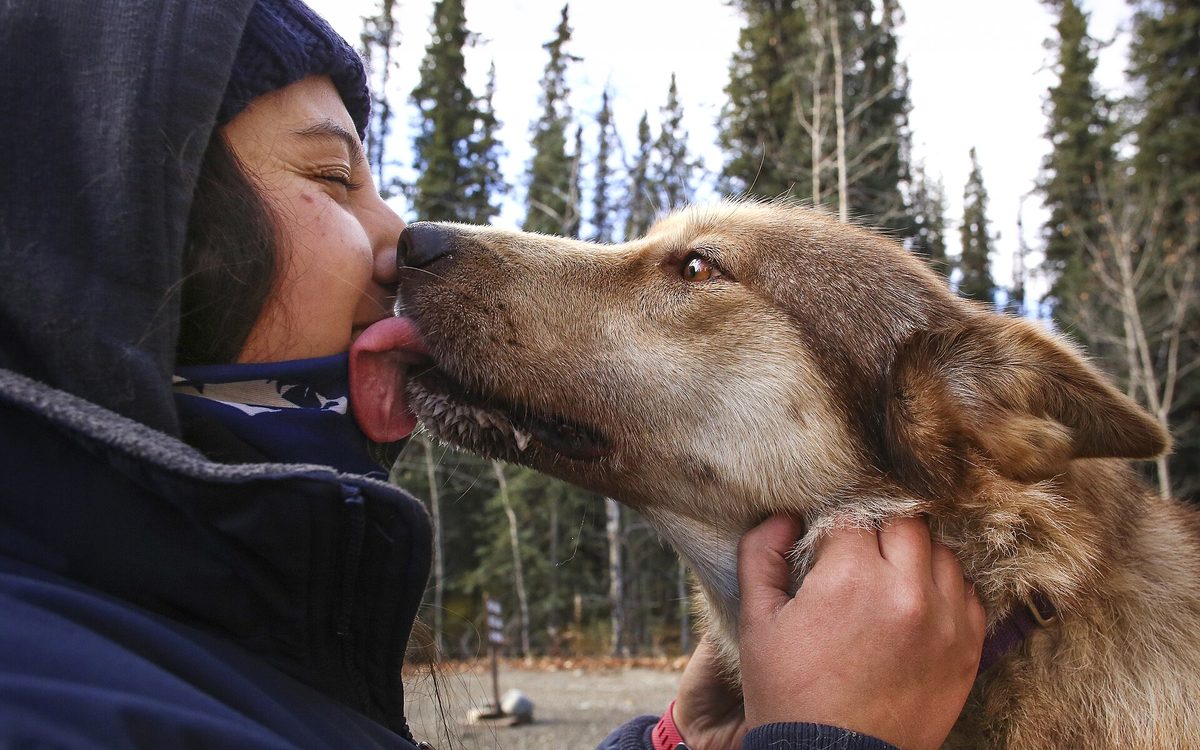
Dogs lick people for several reasons, and most of them are friendly. A lick can be a greeting, a taste of salty skin, or a habit that started in puppyhood and got rewarded along the way. Your dog's body language and the situation tell you which one you are seeing.
Why does my dog lick my face when I come home?
The most common explanation is that it is a greeting. Many animal-behaviour references describe face licking in adult dogs as a social behaviour that grew out of something puppies do.
Puppies lick the mouths of adult dogs. In wild canines such as wolves, that licking can prompt an adult to bring up food for the young ones. Many behaviourists see this as the root of the friendly greeting we get at the door.
It goes back even further. Mother dogs lick their newborn puppies often, to clean them and to help them bond. Licking is one of the very first kinds of care a dog ever experiences.
So when your dog licks your face, they are using a very old canine tool for saying hello and staying close. Your face is also the part of you that is most within reach.
Why does my dog lick my skin? Do I just taste good?
Partly, yes. Human skin tastes salty from sweat, and dogs explore the world through taste and smell together. A lick gives your dog a quick read on the salt on your skin.
It also carries your scent. Because dogs rely so heavily on smell, a lick can tell them a lot about where you have been and what you have touched.
This is why dogs often go for hands, arms and legs after you have exercised, been out in the heat, or come back from somewhere new. It is information gathering as much as affection.
This is a likely reason rather than a proven one for every dog. Behaviour sources offer it as one explanation among several, and the real cause can differ from dog to dog.
How can I tell what a lick means?
Look at the rest of the dog, not just the tongue. The same action can mean different things depending on the body behind it.
- Loose, wiggly and waggy: this often points to a happy hello. The whole body looks soft and relaxed.
- Low body, ears back, quick licks: this is commonly read as an appeasement or calming signal, a way of saying "I'm no threat."
- Licking aimed at you after something tense: the dog may be trying to smooth things over.
How a signal is read always depends on context. A lick on its own is not a full sentence, so look at posture, ears, tail and what just happened.
If you see a lowered body and quick licks, the kind thing to do is stay calm and give your dog some space. Piling on more attention is rarely what a worried dog needs.
Did I teach my dog to lick me?
Very possibly, and most owners do it without noticing. Licking tends to increase when it is rewarded with attention.
The pattern is simple. Your dog licks you, you laugh, say their name or give them a pet, and your dog learns that licking gets a great result. They try it again, and again.
This is basic positive reinforcement, which is well established in learning theory. It works on every behaviour, wanted or not.
None of this means you did anything wrong. It just means that many licks are not only instinct but also a habit you helped build, and habits can be gently reshaped.
Is it safe to let my dog lick me?
Here is a popular myth: a dog's mouth is cleaner than a human's. It is not. A dog's mouth carries its own bacteria, and some of them can pass to people.
For most healthy adults, a lick on intact skin is usually not a worry. Veterinary and public-health guidance does advise some care, though.
- Keep licks away from open cuts and wounds.
- Keep licks off babies' faces and hands that go in their mouths.
- Take extra care around anyone with a weak immune system.
Washing your hands after playing with your dog, and especially before eating, is a sensible habit. If you have a wound or health concerns and a dog that licks a lot, ask your doctor for advice.
How do I get my dog to lick less?
If the licking is sweet but too much, reward-based habits work well. Nothing harsh is needed, and scolding tends to confuse dogs rather than help.
- Turn away calmly. When the licking starts, stand up or turn your body without fuss. No attention is the key part.
- Reward calm greetings. When your dog says hello with four paws on the floor and a relaxed body, give them praise or a treat straight away.
- Offer something else to do. A chew gives that busy mouth a job and a good place to put its energy.
- Stay consistent. Everyone in the home should respond the same way, or the dog gets mixed messages.
Give it time. A habit that has been rewarded for a long while will not vanish overnight, but most dogs learn what works.
When licking is a reason to call the vet
Most licking is normal. But sudden or constant licking can sometimes point to stress or a medical issue.
If your dog's licking changes suddenly, becomes nonstop, or seems hard for them to stop, ask your vet. Only a vet can work out what is behind it, so do not try to guess at home.
So what is your dog actually telling you?
Most licks are hellos, tastes and habits you helped build. They trace back to the earliest care a puppy ever gets and to a food-sharing greeting seen in wild canines.
Watch the whole dog, enjoy the friendly licks, and use calm, reward-based habits if you would like fewer of them.