 Dogs Explained
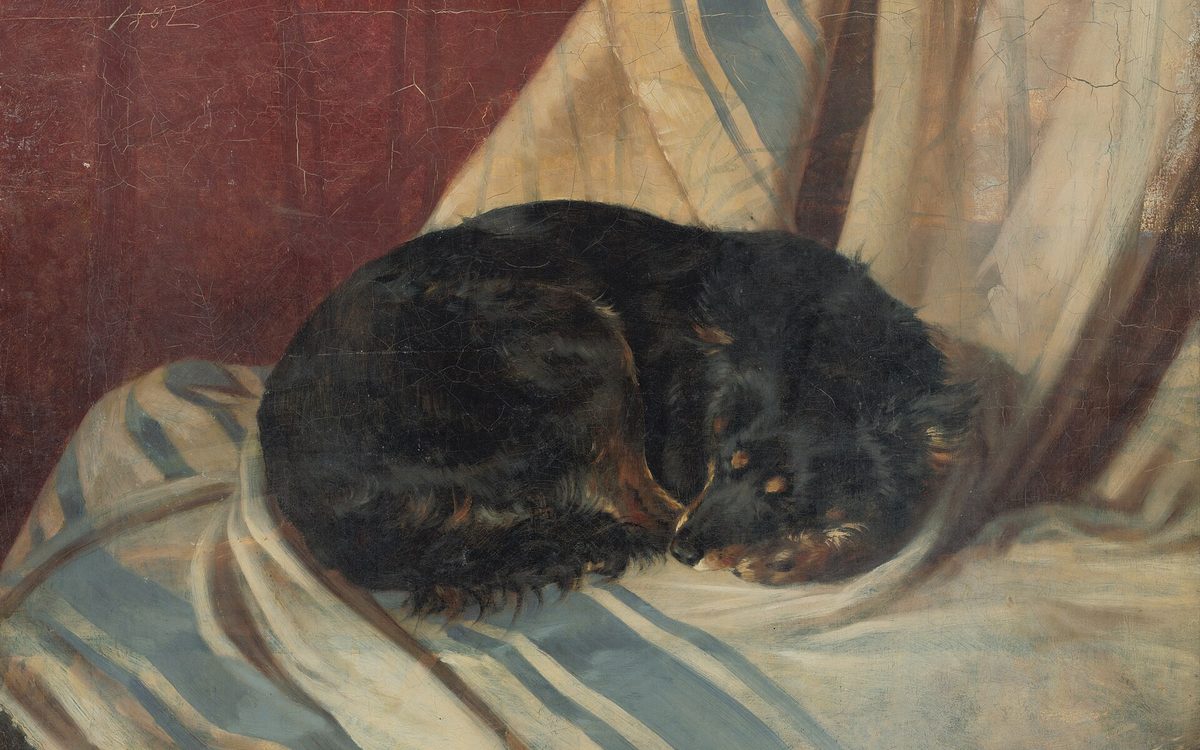
Dogs spin before lying down mostly because of an instinct inherited from their wild ancestors. Circling likely once flattened grass, leaves or snow into a comfortable resting spot, and it may also help a dog look around and leave its scent before it settles.
It is not something most dogs have to be taught. The behaviour shows up across breeds, including dogs that have only ever slept on soft beds.
Is the bedtime spin an instinct or a learned habit?
It is widely considered an instinct. Animal-behaviour and veterinary sources describe it as inherited from wild ancestors rather than picked up from watching other dogs or from being rewarded.
That explains why a puppy raised on a cushion will still turn a few times before dropping down. The routine was probably useful for so long that it stayed in the dog's behaviour, even though the original job is mostly gone.
What were wolves doing when they circled?
Wolves and other wild dogs rest on natural ground such as grass, leaves or snow. Natural ground is lumpy and uneven, and nobody makes the bed for them.
Trampling the spot in circles likely flattened it into a more comfortable patch. This is the most commonly cited explanation for the behaviour. It is a well-supported hypothesis about the likely origin, not a proven single cause.
Your dog's bed is already flat and soft. The instinct simply does not check first, so the turns still happen.
Does circling help a dog feel safe?
It may. Lying down means being off guard for a while, because a resting dog is less alert than a standing one.
Each turn gives a dog a chance to look around and sniff the air before settling. This is a common behavioural idea about vigilance before rest, so it is best read as a likely extra benefit rather than a certainty.
You might notice that dogs often circle more in a new place. That fits the idea, though it does not prove it.
Why does my dog scratch at the bed, too?
The scratching that often goes with the spin may have more than one purpose. In the wild it could help shape the resting spot, just like the circling.
It may also leave scent. Dogs have sweat glands in their paw pads, so pawing at a surface likely leaves a smell that marks the spot as theirs. Scent-marking through scratching is widely described in behaviour sources.
Put together, the whole routine may look like this:
- Flatten the spot.
- Check the surroundings.
- Mark it with scent.
- Lie down and rest.
Not every dog does every step, and some do them in a different order. Left, right, a single turn or five turns are all normal variations.
Why is my older dog circling for so long?
Older dogs may circle longer than they used to, or seem unable to get comfortable. Stiff or sore joints can make lying down harder to get right, so a dog may keep adjusting until the position feels manageable.
Veterinary guidance on joint problems in dogs lists difficulty lying down and restlessness when settling as common signs. That does not mean any one dog has a joint problem. It means the change is worth noticing.
A soft, supportive bed in an easy-to-reach spot can make settling more comfortable for any dog. It does not replace a vet's advice if you suspect pain.
When is circling a reason to see the vet?
A gentle spin before bed is normal. A change in how your dog does it is what matters.
Check in with your vet if you notice:
- Circling that suddenly increases far beyond your dog's usual routine.
- Trouble settling, such as getting up and down repeatedly.
- Stiffness, especially when your dog gets up or lies down.
A change in behaviour can signal pain or another medical issue, and only a vet can say what is going on. Describing what you see, and when it started, helps them.
If your dog has always circled the same way and settles easily afterwards, there is nothing to fix. Please do not try to stop the behaviour. It is natural, and a dog that is scolded for it may simply become more anxious at bedtime.
So, does your dog spin left, right or skip it?
All three are common. Some dogs always turn the same direction, some switch, and some just flop down. No direction has been shown to matter in everyday life.
What counts is how your own dog usually behaves. Learning that normal makes it much easier to spot a real change.